AAS Ultra Analog VA-3 Review: The String Pads That Sound Older Than the Plugin
Lucid Records
November 18, 2026
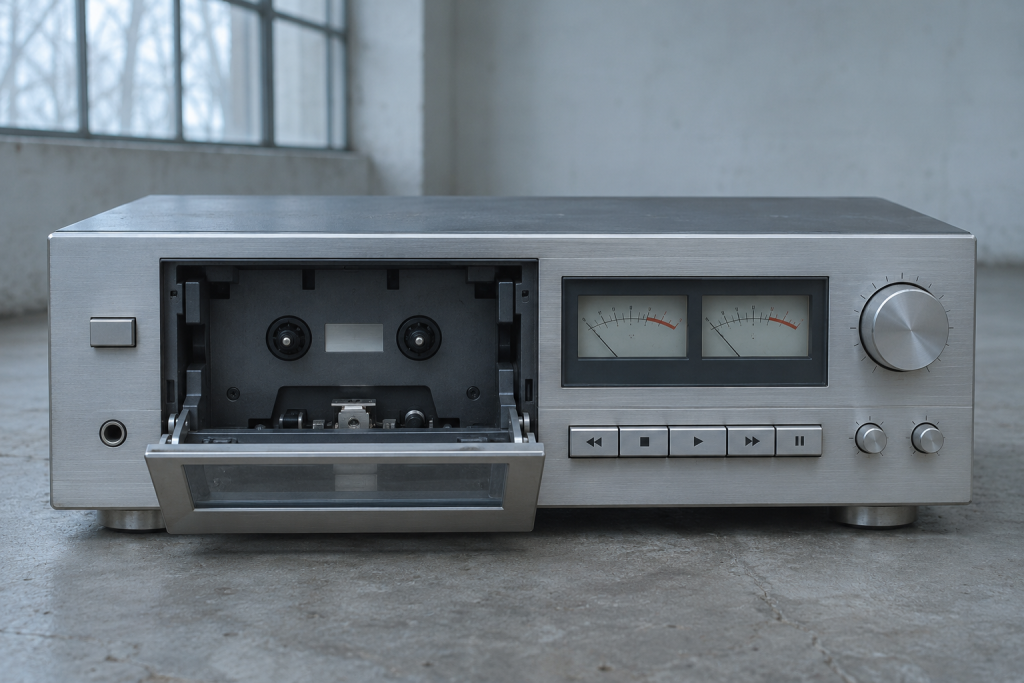
The strings were already there before we touched anything. A slow chord held under a muted arpeggio, and somewhere in the mid-range a harmonic that seemed to belong to a rosin-and-wood instrument recorded in the late seventies, not to a piece of software running on a laptop. We had loaded Ultra Analog VA-3 on a whim, dialed up one of its string ensembles, and then sat there for about ten minutes just letting the sustain ring. That is usually the moment we know whether a synthesizer has a place in our sessions or whether it is going to spend the rest of the year in a plugin list we forget to open.
Applied Acoustics Systems is not a company that chases trends. Ultra Analog VA-3 is their hardware-inspired analog synth, and it behaves like an instrument built by people who spent a lot of time listening to vintage polysynths and very little time reading market research about what producers want next quarter.
The dual-oscillator engine does more than the panel suggests
At its core VA-3 is a two-oscillator virtual analog instrument, which sounds modest next to the four-oscillator monsters that dominate synth reviews right now. But the oscillators here are not just waveform selectors. Each one carries a shape you can blend into, and the tuning, sync and sub controls let you push a simple saw into territory that feels considerably less simple. The aggregate effect of two well-designed oscillators with a decent filter is a sound that sits in a mix without demanding a pile of processing to make it behave.
The filters deserve their own sentence. VA-3 offers several filter character types, and switching between them changes the personality of a patch far more than a different waveform would. A soft two-pole setting on a string pad keeps the top end airy; a steeper, more aggressive character turns the same patch into something with a bit of bite. We found ourselves using the filter more as a tonal instrument than a corrective tool.
There is a modulation architecture underneath all this, routing options that let you connect sources to destinations with more freedom than the fixed layouts of older analog emulations. The envelopes are smooth and respond well to long attack times, which matters enormously for pad work. A synth that cannot produce a genuinely slow, un-robotic swell is not going to earn a place in a downtempo session, no matter how many presets it ships with.
Where the string ensembles come from
Our first impression was that the string patches sound older than the plugin. That is a compliment. They have the rounded, slightly smoky character of a string machine that has been warmed up for hours, not the bright, evenly-stereo sound of a modern sample library. The attack is soft, the vibrato wanders just enough, and the release tail hangs in the room.
This is the part of VA-3 we keep coming back to for melodic and atmospheric work. A string ensemble from this synth drops into a track and immediately suggests a tempo and a mood. It does not need a reverb to sound like it exists in a physical space, though it will happily take one. We have been layering these patches underneath cleaner pad sounds, letting the VA-3 strings carry the human wobble while the more modern layer holds the tuning steady.
Worth saying plainly: if you want a string sound that is crisply modern and cinematic, this may not be the first call. VA-3 wants to sound vintage. It leans into that. The presets have personality, but they also have opinions, and you may find yourself editing a lot to get them out of the seventies. For some projects that is a feature. For a chart-facing pop production it might be a fight.
What it is not
VA-3 is not a wavetable synth, and it does not try to be. If your music depends on scanning through tables or modulating a spectral shape over time, this instrument will feel limited. It is also not a modular playground. The modulation is generous but bounded; you are not going to patch it into a generative environment from inside the panel. And for producers who want a single plugin to cover every synthesis technique, we would point elsewhere.
There is also a learning curve to the interface that is not immediately obvious from screenshots. The layout rewards somebody who knows what they are looking for; it is less friendly to someone auditioning presets in a hurry. The good news is that the sound is strong enough to justify the time spent learning where things live.
The free route into the same family
If the idea of a vintage-leaning analog synth appeals but the budget does not, Applied Acoustics Systems has a lighter entry point in their product line, and that is a sensible way to test whether the character of VA-3 suits your music before committing. We have suggested this to several people who wanted the string sound but were not sure about the whole instrument. Try the character first. If the character fits, the full instrument is a decision worth making.
One practical note for anyone layering these sounds: export stems when you are working with any synth-heavy arrangement, even if the project is entirely your own playing. A stereo bounce of a pad-heavy track cannot be un-flattened later if you decide the string layer needs to sit differently in the mix. Keep the parts separate until the arrangement is settled.
How we are actually using it
Most of our recent sessions have used VA-3 in one of two ways. The first is as the emotional anchor of a section: a single held string or ensemble patch, filtered back, sitting low in the mix, providing the harmonic bed that everything else floats over. The second is as a lead voice for slow melodic lines, where the slightly imprecise tuning of the oscillators gives a phrase a fragility that a sample would not.
We have not found much use for it in dense, rhythmic contexts. The sounds are too generous with their tails, and the filter does not snap the way we want for percussive or plucked material. For downbeat and melodic work it is a different story. The instrument wants to breathe slowly. Fighting that instinct produces muddled results.
The verdict, then, is a specific one rather than a general recommendation. Ultra Analog VA-3 is a vintage-flavored analog synthesizer with a strong identity and a sound that rewards patience. The string ensembles alone justify it for the kind of music we make, and the filters and modulation options keep it useful beyond those first impressions. Producers chasing modern, bright, high-oscillator-count sound design will find it restrictive. Producers who want a synth to sound like a beloved old instrument that happens to run in a DAW will find it very easy to keep on the desktop.
We still have it loaded. That is usually the only review that counts.