RiverFlux Audio Adds Free RF-201 Tape Echo and Spring Reverb to Relic
Lucid Records
November 23, 2026
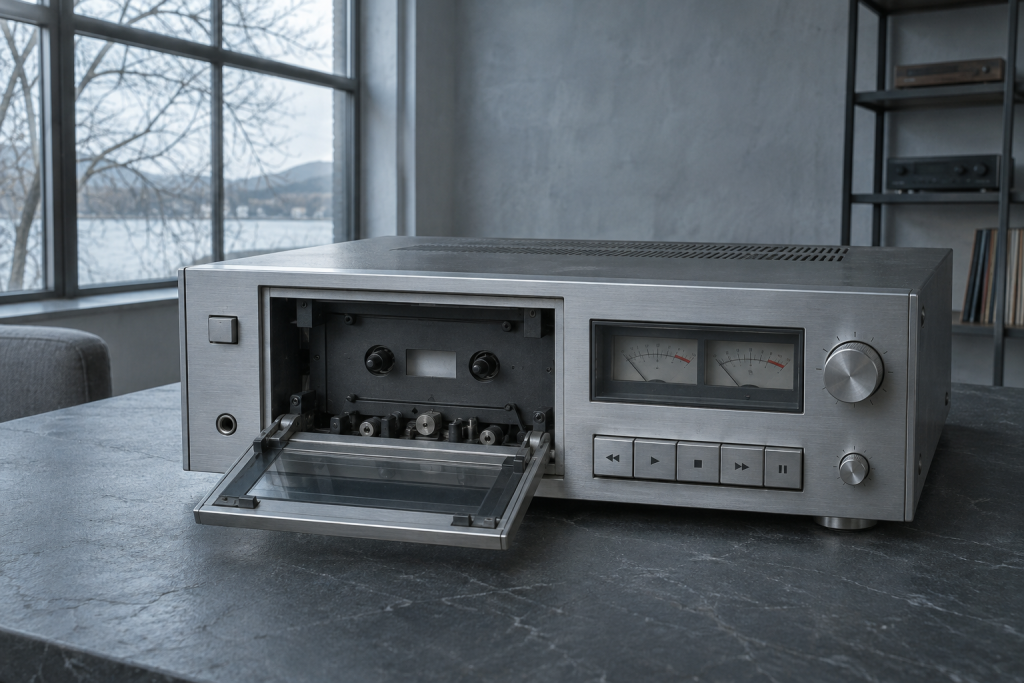
The tape echo is the first thing we reach for when a melody needs to step outside the window and come back a little changed. Lately we’ve been running a lot of small dub sketches through free tape delays to keep the sessions light, and that search just got a little easier. RiverFlux Audio has added two free effects, the RF-201 Tape Echo and a spring reverb, to the Relic line of plugins.
The RF-201 is the one we’re curious about. A tape echo isn’t really a delay in the clean digital sense. It’s a tape loop running under a record head and a playback head, and everything that happens between them colours the repeats: the wow and flutter of the transport, the high end rolling off a touch with each pass, the way the echoes blur into one another when you push the feedback. That smearing is exactly what makes a melodic line feel like it’s drifting through a room instead of snapping back at a fixed interval. If RiverFlux has modelled the mechanics honestly, the RF-201 should reward gentle feedback settings where the repeats decay into a warm haze rather than piling up as discrete slaps.
We can’t verify the exact feature set from the announcement alone, and we’d rather not guess at controls we haven’t seen. What we do know is the price: free, and bundled into the existing Relic collection rather than sold as a separate product.
Spring reverb is a stranger instrument than it sounds
The spring reverb is the more interesting addition for sound design. Springs behave differently from plates or halls. A transducer shakes one end of a coiled spring and a pickup reads the other end, and that coiled path gives you a darker, edgier character that varies wildly from one physical unit to the next. It’s the sound of classic guitar amplifiers, which is why it carries so much association with surf, indie, and rootsier electric playing, but it’s also a gift for anyone building atmospheric textures.
The catch with spring reverb is that it does not behave like polite space. It splashes. It has a metallic, almost rattling tail that can sit beautifully on a plucked synth line and turn muddy the second you overdo it. On a mix, spring can quickly become overpowering if you lean on the send. Treat it as a colour, not a room.
For our kind of music that’s actually the appeal. A spring reverb on a sparse electric piano chord or a single muted synth note adds a gritty, physical sense of place without the wash of a big hall. It says “small room with a characterful amp in it” rather than “cathedral.” Pair it with a long tape echo in front and you get that lovely disconnected dub space where the dry note stays close and the repeats wander off into a spring-loaded fog.
How we’d approach a first session with both
We haven’t put these through a full track yet, so this is the plan rather than a verdict. The shape we’d start with:
- Echo first, spring second. Feed the RF-201 a simple melodic motif and keep the feedback low enough that each repeat is clearly softer than the last. Let the tape colour do the work, not the level.
- Filter the echo return. Tape delay tends to darken naturally, but a gentle high-pass on the return keeps low-end mud out of the way of your kick and bass.
- Use the spring as a send, sparingly. A small amount blended under the dry signal adds grit and a sense of amp in the room without swamping the mix.
- Try the spring on something unexpected. A soft pad, a fingerpicked guitar, even a vocal layer. The metallic tail can make an ordinary part feel haunted.
- Automate the echo feedback. Ride it up for a transition and pull it back for the drop. The blur of tape repeats is a great way to bridge two sections.
The reason tape echo and spring reverb belong together in a downtempo or ambient toolkit is that both are, at heart, imperfect. They add noise and movement and a little unpredictability. That imperfection is what stops a clean digital session from sounding sterile. A melody run through the RF-201 and dusted with a touch of spring suddenly has a history, like it was recorded somewhere with old gear and a bit of dust in the air.
Where these fit against the free field
The free plugin landscape has gotten genuinely serious. Vital and Surge XT have made professional-grade synthesis available to anyone, and the reverb shelf is well stocked with character-first options like Valhalla Supermassive’s huge modulated tails and the vintage-leaning TAL plates. What’s been thinner is free tape echo and free spring reverb with real character. There are no-nonsense spring options out there, but a lot of them are simple or dated. If the RF-201 gets the tape mechanics right and the spring captures that sploshy metallic edge, RiverFlux is filling a real gap rather than adding another me-too plate.
The Relic branding suggests the pair are aimed at the same nostalgic, texture-forward crowd the echo and spring naturally serve. That’s a sensible pairing. Both are effects you reach for when you want the sound to feel lived-in rather than pristine.
The caveats worth stating plainly
Two things we’d want to confirm before relying on these in a session. First, CPU. A tape echo with convincing wow and flutter can be heavier than a plain delay, and a spring model with a detailed metallic tail can eat into your headroom. Free plugins are not automatically light. We’d want to test a few instances before committing a full arrangement to them.
Second, the character itself. A spring reverb is only worth using if it has the right amount of bite. Too clean and it’s just a small room. Too harsh and it’s unusable on anything but a deliberate lo-fi effect. The free spring options that already exist tend to be effective but simple, and the better ones add tone-shaping like a tube preamp stage to tame the edge. Whether RiverFlux’s spring has that control is something we’ll find out on the first real session.
The RF-201 and the spring reverb are free additions to the Relic line from RiverFlux Audio. We’re loading both into the next sketch and letting the tape blur a melody while the spring adds its dust. If the echo smears the way real tape should and the spring stays on the right side of metallic, these two will earn a permanent spot in the template. If not, they’re free, and we’ve lost an afternoon to worse ideas.