Omnisphere vs Pigments: Which Synth Earns Its Place in a Melodic Studio?
sapi_44530a
October 8, 2026
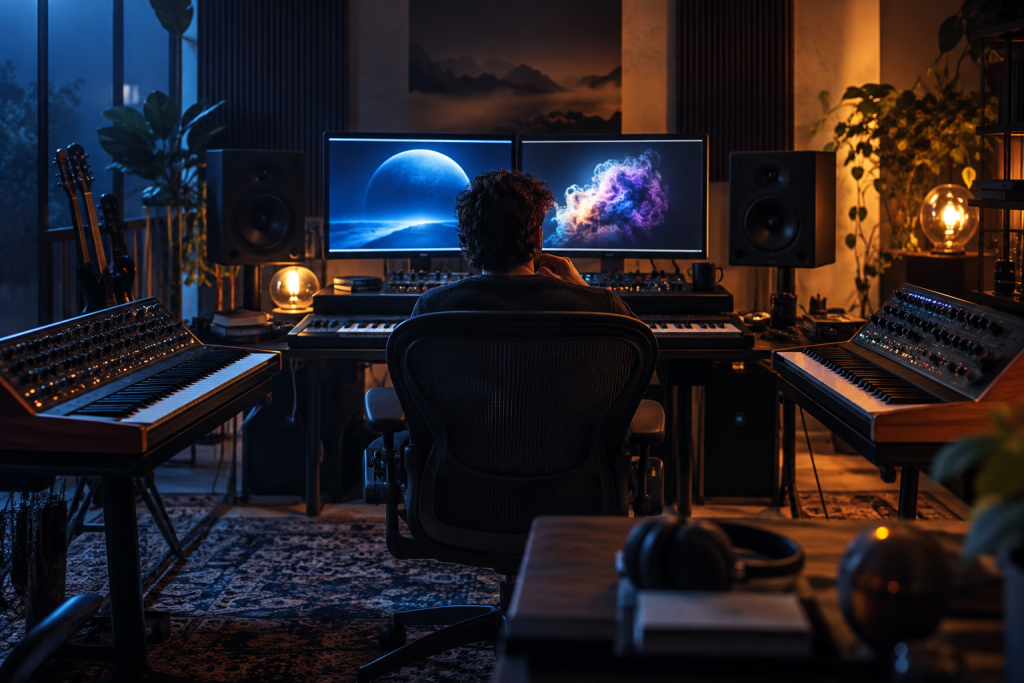
I’ve had both of these synths open on the same session more times than I can count, and the honest answer to “which one wins” is: it depends on whether you write melodies or you write textures. Omnisphere and Arturia Pigments 5 both sit at the top of the software synth pile, and both appear on nearly every “best synth VST” list worth reading – Omnisphere for its vast library of weird and wonderful samples, Pigments for its modulation depth and modern sound design. But they approach the job from completely different directions, and that difference matters a lot when you’re actually sitting there trying to finish a track with a lead line that needs to sing.
Let’s cut through the spec-sheet worship and talk about what each one is actually good at in a melodic context – pads, keys, leads, evolving textures that support a melody rather than bury it.
What Each Synth Actually Is
Omnisphere is Spectrasonics’ flagship, and the way it’s usually described is telling: it has the world’s best library of weird and wonderful samples. That’s not a knock. Omnisphere is a hybrid engine built around an enormous curated sample collection, layered with synthesis and a deep effects section. It’s less “build a patch from a saw wave” and more “start from something that already sounds like a finished record and shape it.”
Pigments is the opposite philosophy. It’s one of Arturia’s few titles that doesn’t emulate an old keyboard or synth, and it’s also the company’s most powerful instrument. It gives you four synthesis types – Analog, Wavetable, Sample and Harmonic – and the thing people consistently point to as its best feature is its easy modulation, which lets you create fantastically evolving sounds without fighting the interface. It looks fantastic and sounds amazing, which is why it keeps showing up as one of the best modern sound-creation options out there.
So right away you have a fork in the road: library-first versus engine-first.
Where Omnisphere Wins in a Melodic Studio
If you’re scoring to picture, writing ambient or downtempo beds, or you need a patch that sounds like it cost more than your car, Omnisphere’s sample library is the reason it dominates cinematic and sound-design work. The samples aren’t just bread-and-butter instruments – they’re the strange, resonant, half-broken textures that make a track feel like it has history.
For melodic writing specifically, that library-first design is a real asset. When I need a bell tone that carries a melody but has grit underneath, or a plucked texture that decays into air, I’m usually starting in Omnisphere because the raw material is already emotionally loaded. I’m shaping, not building. That’s faster when the melody is the point and the sound is support.
Omnisphere also shines when a melody needs to sit in a dense mix. Because so much of its content is sample-based and pre-processed, patches tend to have a certain “finished” quality out of the box – they occupy space in a way that often needs less EQ surgery than a raw synthesized tone.
Where Pigments Wins
Pigments is where I go when the sound itself needs to move – when the melody is static but the texture around it should evolve over eight or sixteen bars. That modulation engine is the whole story. You can route and animate parameters with a fluidity that makes evolving pads and generative-feeling leads easy to dial in, and the fact that you get Analog, Wavetable, Sample and Harmonic engines in one instrument means you can build a patch that borrows from several approaches at once.
The Harmonic engine is the sleeper here for melodic work. It gives you additive-style control that’s genuinely useful for bell tones, glassy keys, and vocal-adjacent leads – the kind of sounds that sit high in a mix and still feel rich rather than thin. Combine that with wavetable scanning and you have a synth that rewards time spent.
The other quiet advantage is price and accessibility. Pigments sits at a much friendlier price point than Omnisphere, which lowers the barrier if you’re building a studio piece by piece rather than buying one flagship and calling it done.
The CPU and Workflow Reality
Neither of these is the cheapest synth on your CPU, but they fail differently. Pigments’ modulation-heavy patches – lots of LFOs, multiple engines layered, long effect chains – can get hungry fast, and it’s worth bouncing or freezing evolving textures once they’re printed. Omnisphere’s sample-based patches are generally manageable, but stacking multis can add up.
Workflow-wise, this is where taste really decides it. Some producers think in parameters and love Pigments’ visual modulation routing – dragging an LFO onto a destination and watching it move is genuinely satisfying. Others (and I’ll admit I lean this way when I’m tired) just want to browse until something speaks, tweak three knobs, and record. Omnisphere is built for that second mode. If you’ve ever noticed that virtual instruments make it easy to stick to beaten paths and presets, Omnisphere leans into that as a feature rather than a bug – its presets are good enough to be a starting point you actually keep.
Which One Earns Its Place?
If your studio is melody-first – singer-songwriter material, cinematic cues, ambient and melodic downtempo where you need evocative, finished-sounding tones fast – Omnisphere earns its place on the strength of its library. It’s the synth you reach for when you want the sound to already carry emotion before you’ve touched a filter.
If your studio is design-first – you build sounds, you sculpt movement, you want four engines and a modulation system that gets out of your way – Pigments earns its place as the more capable pure instrument for the money. Its four synthesis types and effortless modulation make it one of the best modern sound-creation tools available, and at its price it’s an easy recommendation for anyone who wants to actually learn synthesis rather than just audition presets.
Here’s the thing, though: they’re not really competitors. They’re complementary. Omnisphere is your library of finished, emotionally loaded material. Pigments is your workshop for building something that didn’t exist before. Plenty of melodic studios end up with both, and use each for exactly what it’s best at. If you can only buy one right now, ask yourself a simple question: do I want to find a sound today, or do I want to build one? Your answer is your answer – and it’s the right one.