FabFilter Pro-R 2 Update: What the New Tail and Freeze Controls Do for Ambient Mixes
sapi_44530a
September 29, 2026
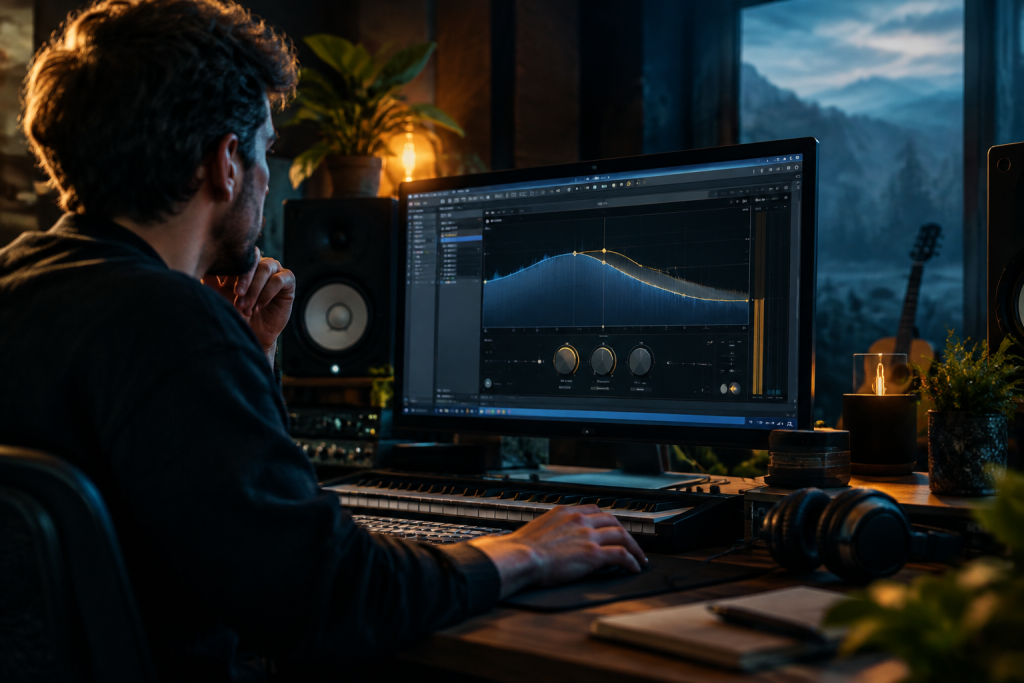
The first time I froze a FabFilter Pro-R 2 tail and let it hang under a beat with no other reverb in the session, I got it. That single button changes how you build an ambient mix. It is not just another feature slapped onto a reverb. It is a way to turn the reverb itself into an instrument, a bed, a pad that never quite stops moving.
If you already use Pro-R 2 in your sessions, you know the angle: this is the surgical reverb, the one that thinks in frequency. It carries the same EQ engine as Pro-Q, and the decay rate EQ lets you shape how different frequencies fade out over time. Most of the ambient producers I know reach for character reverbs when they want mood, and Pro-R 2 when they want control. The new tail and freeze behavior is what finally makes Pro-R 2 interesting for the dreamier end of the spectrum, where the reverb is often the most musical element in the track.
What the freeze actually does
Freeze holds the current reverb state in place. Instead of the tail continuing to decay, it sustains, and the plugin keeps feeding that captured energy back into the output. On a synth pad or a single piano note, you can catch the moment when the tail is still dense and wide, freeze it, and play against it. The reverb becomes a drone underneath everything.
This is different from a shimmer effect that keeps regenerating. Freeze is a snapshot. What you do with that snapshot is up to you. You can freeze a bright, airy tail and let it sit under a lofi beat like tape hiss. You can freeze a darker tail and use it as a low pad. The character is whatever you froze.
Why it matters for ambient work
Most ambient tracks live or die on the transition moments, the bars where one texture fades and another arrives. Freeze lets you build those transitions by hand. Freeze the tail, filter the dry source out for four bars, then unfreeze. The room keeps breathing even though the source stopped.
I use it on piano and on granular sources because the reverb tail becomes the melody for a few seconds. It is a low effort, high payoff move. One button. No extra plugin.
The tail controls, and where they actually help
Pro-R 2’s decay rate EQ is the headline feature here, and it is the reason the tail matters. Instead of a single decay time for every frequency, you draw how the tail behaves across the spectrum. You can make the lows decay fast and the highs linger, which is how a lot of real ambient spaces actually sound. You can also do the opposite and let the low end sit while the top end dries up fast.
The 6-band EQ section then lets you carve the tail directly, cutting mud below 200 Hz, taming a harsh 3 kHz region, and adding air above 10 kHz without leaving the plugin. For ambient mixes where the reverb IS the texture, that is the difference between a tail that blooms and a tail that muds up the whole track.
Concrete starting points
- Endless pad tail: long Space, decay rate EQ with slow decay in the high band, a gentle low cut below 200 Hz, and a slight high shelf boost above 10 kHz. Freeze it on a held chord and ride the wet level.
- Lofi beat bed: shorter decay, cut above roughly 8 kHz to keep it tape-dark, low cut around 150 Hz so it does not fight the kick. Freeze the tail on the last hit of a phrase.
- Vocals in a dream-pop mix: darken the reverb below 500 Hz so the voice stays present, tame around 3 kHz where the tail can get harsh, and add a touch of air up top. Do not freeze the whole thing, just catch short moments.
These are starting points, not recipes. The point is that Pro-R 2 lets you tune these decisions per frequency, which is not something most reverbs offer without a separate EQ strapped after them.
Where Pro-R 2 is not the right answer
I need to be honest here, because it matters for ambient producers specifically. Pro-R 2 is clean and surgical. It is not characterful. If you want the sound of a specific vintage plate, or the color of an 80s digital unit, this is not the plugin for that. Valhalla VintageVerb, UAD AMS RMX16, or Relab LX480 will get you there faster, and they will sound more beautiful in the process.
Convolution accuracy is another gap. LiquidSonics Reverberate 3 handles real-space emulation in a way Pro-R 2 cannot. So if you are chasing the exact resonance of a cathedral or a specific hardware unit, Pro-R 2 is not your reverb. It is the wrong tool.
The other annoyance: depending on what you are running, freeze behavior can be fiddly to time. It does not always catch the tail at the exact moment you want, especially on fast sources. You end up retriggering the freeze to land the right density. That is a workflow thing, not a sound thing, but it is worth knowing before you build a live set around it.
Price, and whether the update is worth it
Pro-R 2 sits around $199 one-time, and FabFilter routinely discounts it to about $129 during sales. The plugin itself is not the cheapest reverb you can buy, but the EQ integration is what you are paying for, and it is genuinely useful in a busy ambient arrangement where the reverb has to coexist with pads, delays, and sub bass.
If you already own Pro-R 2, the tail and freeze behavior is the update that makes it worth reopening. If you own the original Pro-R, the upgrade path is usually reasonable during FabFilter’s sales, and the decay rate EQ plus freeze is the argument for moving across.
If you do not own any FabFilter reverb and you are shopping for ambient specifically, the honest answer is that Valhalla VintageVerb at around $50 is the more fun first purchase. It gives you character for days and it will sound like the records you love faster. Pro-R 2 is the reverb you buy when the character is already there from other plugins and you need something to sit underneath it, tune the frequencies, and hold the room in place.
How I actually use it in a track
My current default on a downtempo piece: one Pro-R 2 on a send for the main space, tuned with a high cut around 8 kHz and a slight lift at 12 kHz for air, plus freeze assigned to a hardware controller so I can catch tails live while playing pads in. A second, lighter instance on the beat bus, mostly there to glue drums into the same room, with the freeze left off. Then Valhalla VintageVerb or Supermassive on a separate send for actual character.
Pro-R 2 does the careful work. The character reverbs do the mood. That division of labor is what finally sold me on the update, and it is the place where a reverb like this makes sense in a dreamy, atmospheric mix.
The tail is not decoration. It is the fourth instrument.