Baby Audio Spaced Out Review: A Delay That Wanders Off and Comes Back Dreamier
Lucid Records
November 9, 2026
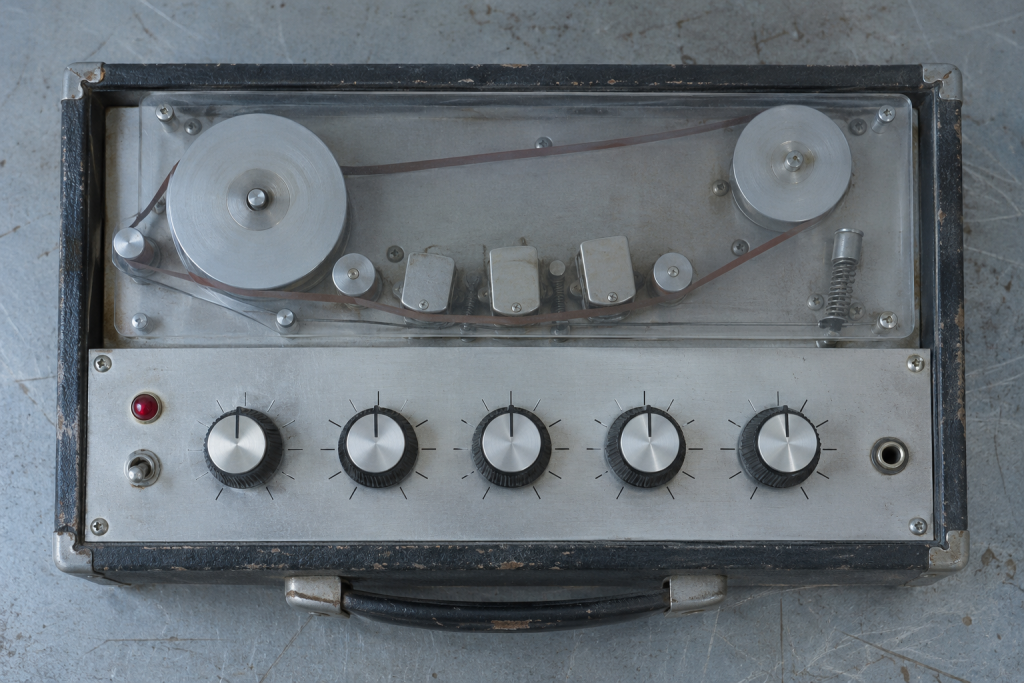
The first time Spaced Out opened on a plucked synth, we did not hear a delay. We heard wobble. The repeats drifted in and out of tune, the tail smeared into something closer to a reverb, and the dry signal sat dead center while the echoes wandered off toward the back of the room. Five minutes later we had committed a lead that we could not have written on a clean 3/16.
That is the whole point of this plugin. Spaced Out is not built to reproduce your input faithfully; it is built to make your input sound like it is dissolving. Whether that earns a place on your send bus depends entirely on how much control you want over the mess.
What it actually does
Baby Audio designed Spaced Out around a dark, spacious delay engine with a stack of four modulation and space processors riding on top. It is a single creative tool rather than a clean utility, which matters if you are expecting something transparent.
The core is a stereo delay with a built-in tape-style wobble and a character section that pushes the signal into saturation. From there, a wet-effects rack adds a reverb, a phaser-drift vibe, and a filter, all wired to blend into the echoes rather than sit alongside them. The result is a plugin where the tail does the design work.
The controls we keep coming back to:
- Wobble, a tape-modulation circuit with rate and depth. This is the drift you hear. Push it and the repeats pitch-bend like a worn reel.
- Space, a diffusion and reverb wash that smears the repeats into a longer, softer cloud. This is what turns a discrete echo into an ambient tail.
- Character, the saturation stage that adds harmonics to the echoes. It colors the feedback path, so the tail thickens over repeats instead of thinning out.
- Drift, a slow random modulation that moves the delay time around. Small amounts are magic; large amounts make it feel seasick.
- Filter, with a tilt-style tone control that darkens or thins the wet path.
There is also a mute and wet-only mode, so you can drop Spaced Out on a parallel send and run it fully wet without dealing with the dry blend in the plugin itself.
The wobble is the reason to load it
Most delays with a “tape” mode are doing one of two things: static pitch drift, or a one-shot pitch bend when you toggle the time. Spaced Out gives you a continuously moving wobble, which means every repeat is slightly out of tune with the last one. On a pad that is exactly what you want. The tail stops being a copy of the source and starts being an ensemble of versions of it.
We have been putting it on keys with a short wobble and a long filter tail, and the effect sits somewhere between a chorus and a reverb. It is the sort of thing that makes a plain Rhodes patch feel like it is being played back from memory.
The catch: wobble does not care about your key. On a sustained bass note or a vocal, a high depth setting will actually mistune the repeats. Our default is a low rate with just enough depth so the repeats sit slightly sharp or flat of the source. If the part is harmonically exposed, we often turn wobble down and let character and space do the work instead.
That is a real limitation, not a character flaw. It just means this is not the delay you reach for on a rhythmic stab or a lead with a tight groove, because the wobble will fight the timing. Where it shines is anything sustained, ambient, or vocal that you want to drift.
Space, diffusion, and the tails you cannot quite place
The reverb knob on Spaced Out is doing something closer to diffusion than room simulation. Push it and the echoes stop being discrete objects and start being a wash. If you have spent any time stacking a delay and a plate reverb to get that long, endless tail, this replaces the stack with one control that keeps them in sync.
Because the reverb lives inside the delay rather than after it, the tail follows the feedback. The decay breathes with the echoes. That is a different sound from running a hall reverb on a send, and it is the reason Spaced Out is fun on plucks, mallets, and arpeggios where you want the ambience to feel like part of the instrument.
It is worth saying plainly: if you want a clean, realistic space for tracking, this is not it. It is not supposed to be. The “space” here is a texture, not a room.
Where it sits in a working session
We have found three reliable uses.
First, a fully wet insert on a send for an ambient lead or pad. Crank the mix to 100 percent, set the filter dark, and let the DRY stay muted so the part is entirely the plugin’s echo cloud. Because of the wet-only mode, you can keep the plugin on a parallel aux and blend it with the fader without the dry path leaking in.
Second, as a modulation source on a mono source. If a synth pluck sounds flat and static, a short delay with heavy wobble and low feedback gives you a pitch-drift chorus that is more organic than a standard chorus. We ran it on a vintage-style lead and the drift warmed the whole part without the thinness that comes from a stereo widener. If you have read about crosstalk cancellation in spatial tools, you will notice the difference, since delay-based spread keeps the center intact while moving the edges.
Third, as a texture generator for a transition. Set feedback high, space high, and let the tail smear a single hit into a riser. The feedback path stays musical because the character stage thickens it as it goes, so it does not decay into a hash of noise like a raw feedback loop can.
What it is not good for: a tight rhythmic ping-pong you can program tap by tap. If you want that kind of serial, pattern-based delay you are better off with a tool like Sirial, the free Tiagolr plugin that lets you set amplitude and feedback per tap and shapes the decay with saturation, diffusion, and damping. Spaced Out is the opposite approach: fewer decisions, more drift.
Compared to the free and cheap delays we keep around
There is a lot of delay in the free tier right now, and some of it is genuinely good. DLAY Lite from FRCTL Audio gives you a presets-based delay with a Wash knob that turns echoes into a reverb-like cloud, and you can arrange up to 12 echoes. It is quick and lovely on a send, though the fixed presets and the nudge toward the paid version keep it from being a real sound-design tool.
MKS Mixing’s DelayU-42 models classic 80s rack delays and rewards you for pushing the input into its saturation and limiter behavior, and you can even use it as a saturation box with the delay time at zero. That is a different flavor of character, more grit than drift.
Pluralis, from United Plugins, splits the signal into Mid/Side, Left/Right, or other pairs and applies different delays to each part. That is a powerful way to widen, though it is a more analytical tool than Spaced Out, which leans on feel.
Spaced Out does not compete with any of these on flexibility. It wins on speed and on its particular wobble-and-diffusion character, which none of the free delays we have tried match. If you already run a plate reverb after a cheap delay, the two knobs on Spaced Out might save you a routing step.
The annoyances
Spaced Out is not precise. You cannot dial a delay time in milliseconds and trust the drift not to move it. The wobble is beautiful but it makes automation fights likely if you try to lock the tail to a grid. And the character stage colors every repeat, so if you want an echo that stays clean and transparent, look elsewhere.
There is also a learning curve in the opposite direction: too few knobs to explain the weirdness, so you have to play with it for an hour before you know where the sweet spots live. The presets help, but the best sounds we got were from flat settings and a lot of ear work.
Would we keep it loaded?
Yes, but on a specific job. Spaced Out lives on our ambient and downtempo sends, on pads, mallets, and vocal ad-libs where we want the tail to fall apart slowly. For anything that needs a tight, rhythmic echo, we still reach for a pattern-based delay. This is a tool for songs that want to wander, which is exactly what a melodic, dreamy track usually needs.
If your sessions are already full of clean delays and you are looking for one that misbehaves in a good way, this is a strong pick. If you need program-and-forget reliability, it is more temptation than tool.